
The Pirate Radio Revolution
How underground broadcasters supported the UK Garage scene
An outlet outside the mainstream
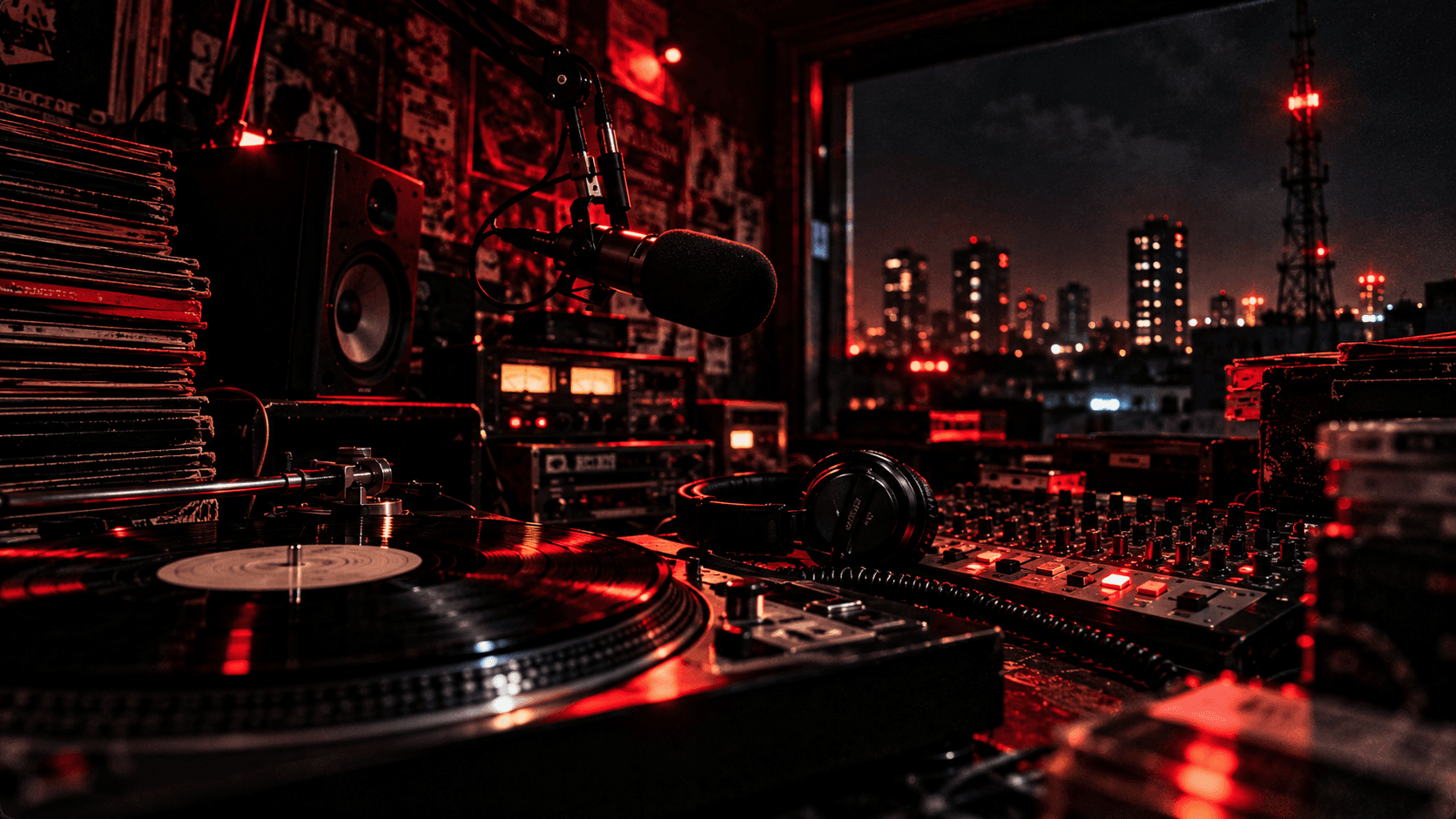
Pirate radio was an important part of how UK Garage developed and spread. Operating without licences, unlicensed stations gave DJs, MCs and producers a way to reach listeners at a time when the sound had little room on commercial radio.
It would be wrong to say that pirate radio created UK Garage. The music grew out of several influences, including US garage and house, jungle, R&B and Jamaican sound system culture, and it developed in clubs, record shops and on the airwaves together. Pirate stations were one strand of that story, and an important one.
The mid-1990s
By the mid-1990s, London stations such as Freek FM and London Underground were closely linked with speed garage and the early UK Garage sound. DJ EZ is associated with Freek FM, and the Dreem Teem with London Underground. Girls FM is also remembered as part of the garage-focused pirate scene.
These stations ran alongside a much larger pirate landscape. The rave and jungle boom of the early 1990s had already produced a wave of unlicensed stations, and many of the people, techniques and audiences carried over into garage.
Rinse FM
Rinse FM is one of the best documented examples. It began as a London pirate station in September 1994, founded by Geeneus and Slimzee, and was initially focused mainly on jungle. Around the end of the decade it moved towards garage, before going on to play a major role in grime and dubstep.
In June 2010, Rinse was awarded a community radio licence by Ofcom and began legal FM broadcasts in February 2011. Its story shows how a station that started underground could move into the licensed world without abandoning the music that built its audience.
Other stations
Other pirate stations, including Deja Vu FM, were also part of the London garage and underground scene as it developed into the 2000s. Each had its own audience and approach, and we avoid ranking them. Where a station appears in this article, it is because published history connects it to the scene, not because it was necessarily the biggest or the first.
MCs and listeners
Garage pirate radio was a place where MCs could be heard alongside DJs, and live shows gave listeners a direct line to the scene. Callers, shout-outs and dedications turned what might have been a one-way broadcast into something closer to a community.
For people who could not get into clubs, a radio was often the cheapest way to hear new music and keep up with who was playing what.
Records and radio
New records, white labels and dubplates moved between DJs, record shops and radio shows. A tune that worked on air could build demand quickly, and radio exposure was one of the ways a track found its audience before a wider release.
Regulation and risk
Unlicensed broadcasting was illegal, and the authorities treated it that way. Ofcom took enforcement action against London stations over the years, including a large operation in late 2005 that involved stations such as Deja Vu and Rinse FM. Equipment could be seized, and individuals could face fines or court action.
Research for Ofcom in 2007 estimated that around 150 illegal stations were operating in the UK, around half of them in London. The same research found that many listeners regarded pirate radio as the best place to hear new and urban music.
Legacy
Pirate radio's legacy in UK Garage is the way it opened up the scene: it gave artists and DJs an audience, gave listeners a route in, and showed that a community could build its own media. Some stations eventually moved into the licensed world, and others faded, but their influence on UK underground music is still clear.
Sources / Further reading
- Rinse FM awarded broadcasting licence — The Guardian, 18 June 2010
- Pirate radio in the United Kingdom — Wikipedia (summarises Ofcom, BBC and press sources)
- Rinse FM — Wikipedia (summarises Guardian and Ofcom sources)
More from Culture
Ready to explore the archive?
Explore Archive